
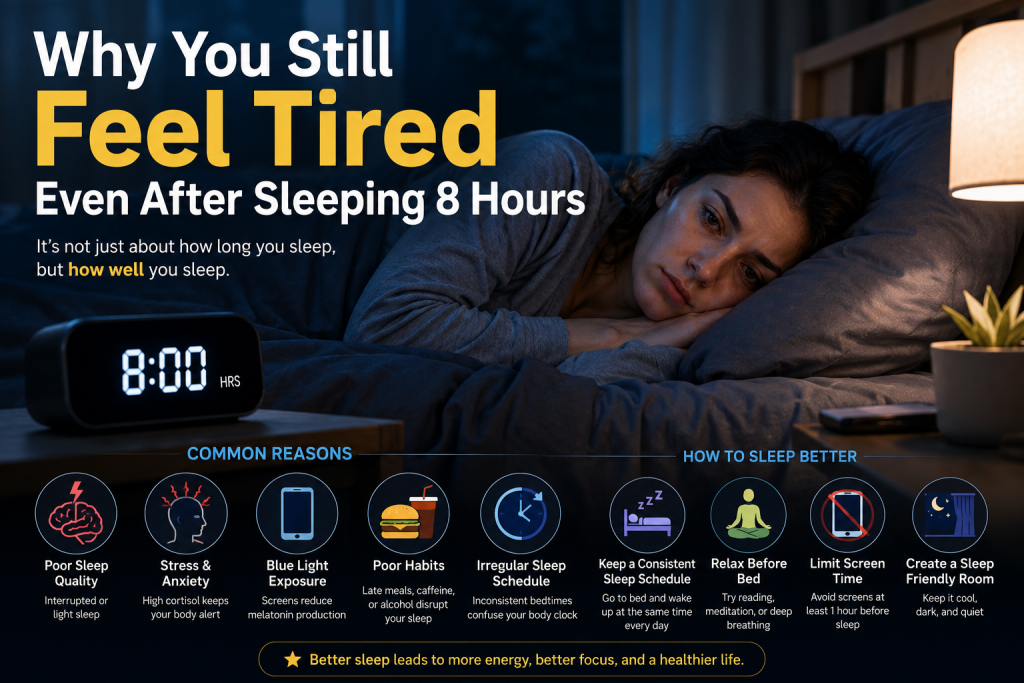
Why You Still Feel Tired Even After Sleeping 8 Hours
Getting a full eight hours of sleep should leave you feeling refreshed, yet millions of people wake up exhausted every morning. The truth is that sleep duration and sleep quality are not the same thing. Even if you spend enough time in bed, your body may not be getting the deep, restorative sleep it truly needs.
One of the most common reasons is poor sleep quality. Constant interruptions during the night, even if you don’t remember them, prevent your brain from reaching deep sleep and REM sleep. These stages are essential for muscle recovery, memory, hormone regulation, and mental clarity.
Another major factor is stress. High levels of cortisol, the body’s stress hormone, can keep your nervous system active throughout the night. As a result, your body never fully relaxes, leaving you mentally and physically drained the next day.
Your daily habits also play a significant role. Looking at your phone before bed exposes your eyes to blue light, which suppresses melatonin, the hormone responsible for helping you fall asleep. Eating heavy meals late at night, consuming too much caffeine, or drinking alcohol before bedtime can also reduce sleep quality without shortening your sleep time.
Many people also overlook the importance of a consistent sleep schedule. Going to bed at different times every night disrupts your body’s internal clock, making it harder to enter deep sleep even if you stay in bed for eight hours.
How to Improve Your Sleep Naturally
Here are a few simple habits that can make a noticeable difference:
Go to bed and wake up at the same time every day, including weekends.
Avoid caffeine for at least 6–8 hours before bedtime.
Turn off your phone, tablet, and computer at least one hour before sleeping.
Keep your bedroom cool, quiet, and completely dark.
Exercise regularly, but avoid intense workouts late at night.
Spend 10–15 minutes relaxing before bed through reading, meditation, or deep breathing.
Get natural sunlight in the morning to help regulate your circadian rhythm.
Remember, better sleep is not about spending more time in bed—it’s about improving the quality of every hour you sleep.
Your energy, focus, mood, and long-term health all begin with one simple habit: getting truly restorative sleep.
Sleep better. Live stronger. Ignite your life.